My daughter Emma and I don't agree on much when it comes to AI. She's spent years becoming a "pen and ink" artist — real hours, hand and paper, the kind of patient skill-building I don't have in me for drawing. I look at the same technology and see something remarkable. She looks at it and sees years of craft potentially made replaceable by twelve typed words. We're both right, honestly, and it took me a while to admit that out loud.
I've been thinking about this partly because of a podcast (Acquired, if you know it — a great walking companion most mornings) that spent an episode on Disney and Pixar, and partly because of a project that has nothing to do with AI at all: twenty-five years of family history research.
I started that project long before any of this technology existed. I hired two wonderful researchers called "The Snoop Sisters" to dig through paper records I couldn't access myself. One of their best finds: in the 1800s, when my ancestors homesteaded, a government office assigned their land to someone else by mistake. It took five years of letters to sort out. When the bureaucracy finally admitted the error, they still demanded five dollars to fix it. Some things about paperwork really don't change. LOL!
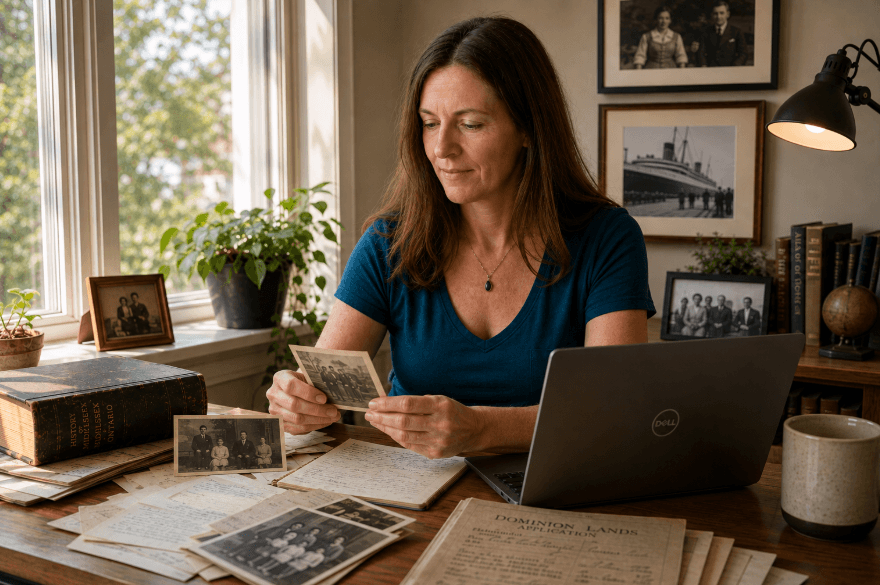
What's different now isn't that a machine did the work for me. Twenty-five years of instinct, curiosity, and knowing which thread in a family story is actually worth pulling — none of that came from a computer. What changed is what I can do with everything the Snoop Sisters and twenty-five years of digging turned up. I can finally take census records, ship manifests, and photographs sitting in a filing cabinet and turn them into something my daughter will actually want to open.
That's the thing I wish I could hand Emma, more than any argument about efficiency: the tools change. What's worth making doesn't. Her hours with a pen and my hours untangling a hundred-year-old family mystery are the same instinct, really — deciding something is worth the time regardless of whether it's the fastest way to get there.
I don't think either of us has to be wrong for the other to be right.