Vital Stats
Born
Bristol, England, 1910
Died
London, Ontario, 1993
Married
George Arthur Thompson, 1941, at St. Paul's Cathedral, London, Ontario
Children
2 (Joan and David)
Siblings
Hilda was the 3rd of 6
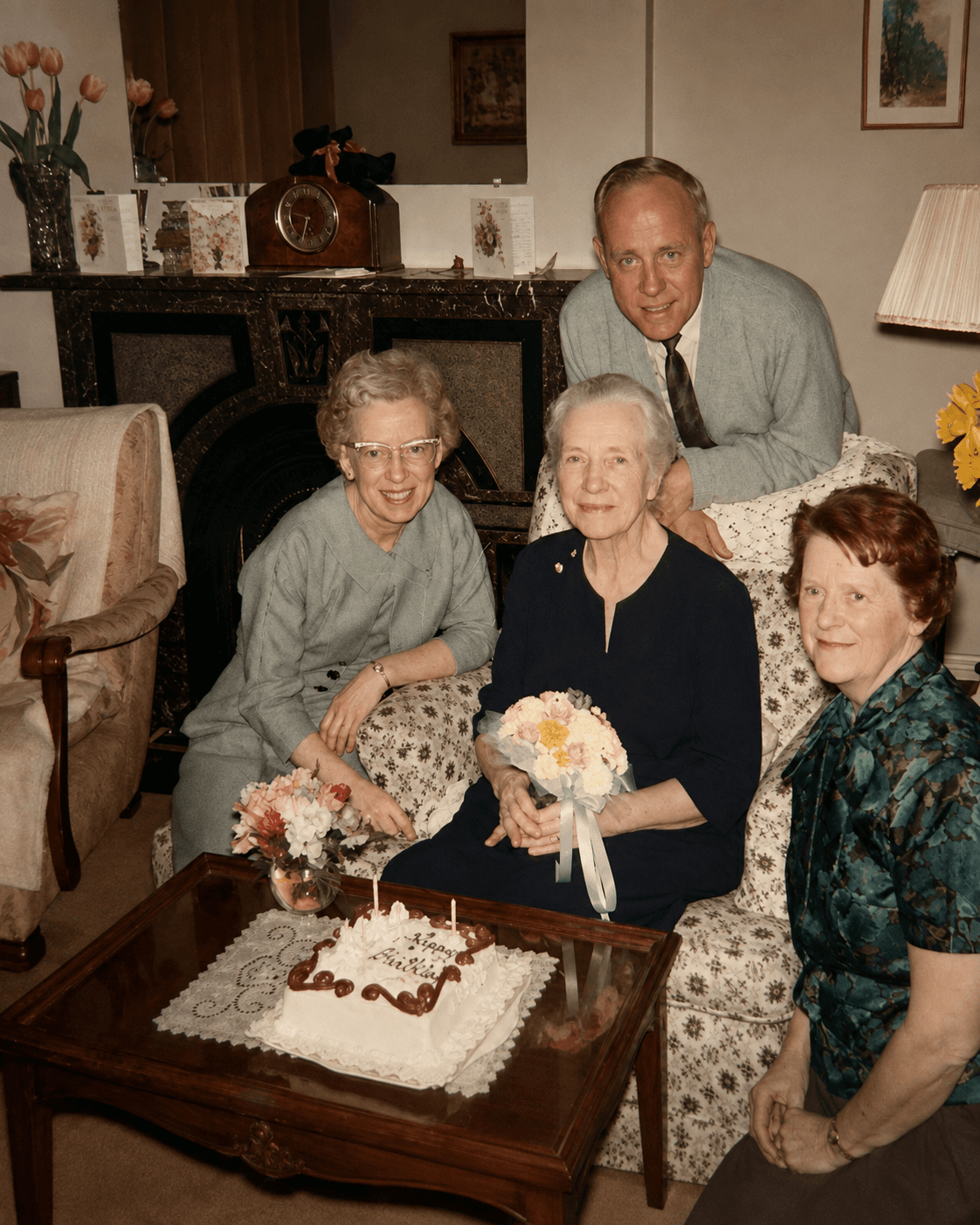
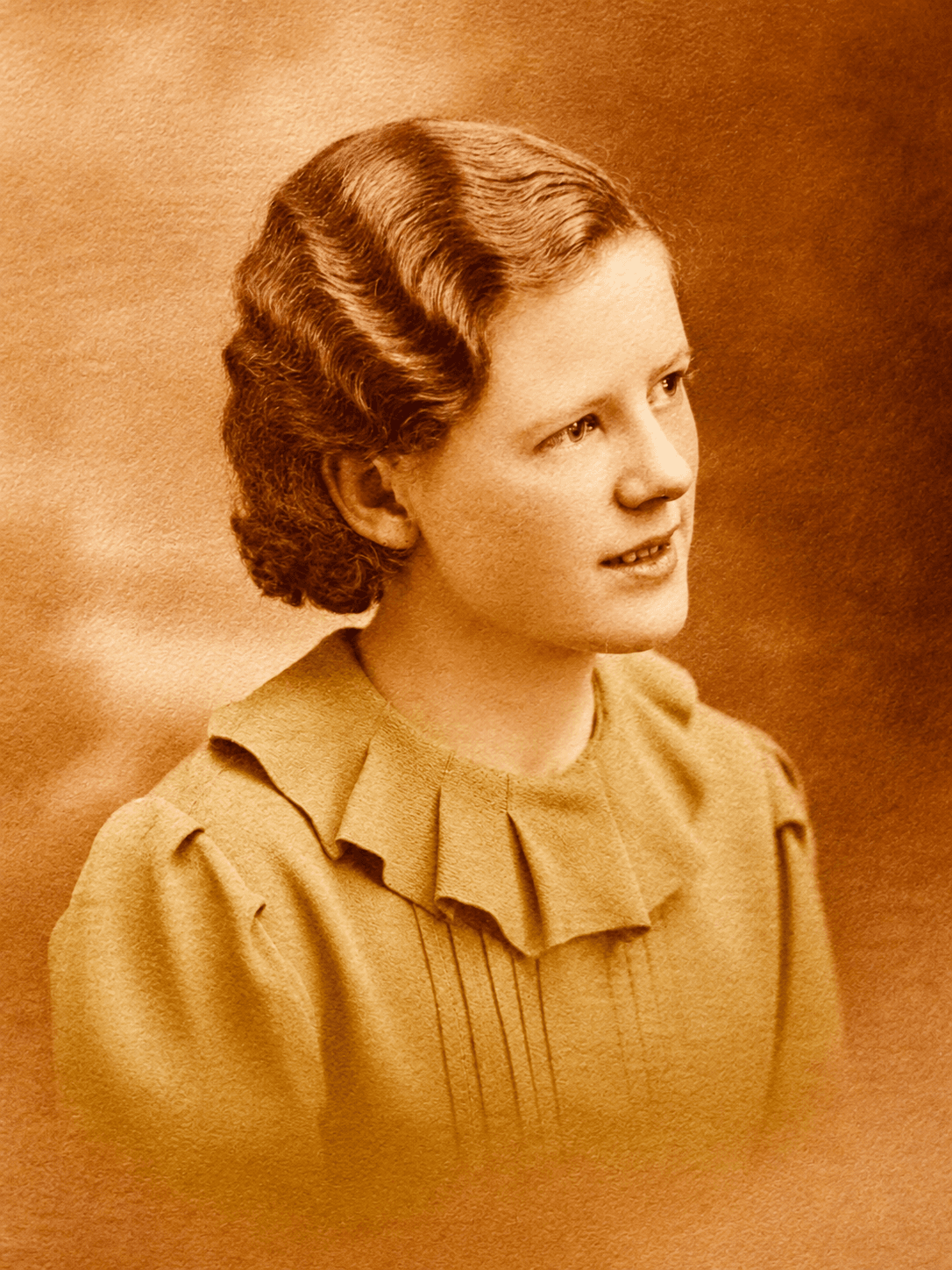
Hilda Emma Rowley, "Dolly" as she was known, was born in Bristol, England on November 25, 1910, and died in London, Ontario on January 9, 1993, at age 82, of a heart attack. She crossed the Atlantic as a toddler in 1913, grew up in London, Ontario, worked through the Great Depression as a bank stenographer and clerk, married George Arthur "Art" Thompson in 1941, raised two children, and spent more than fifty years in Canada before her death. She is buried with Art at Mount Pleasant Cemetery in London.
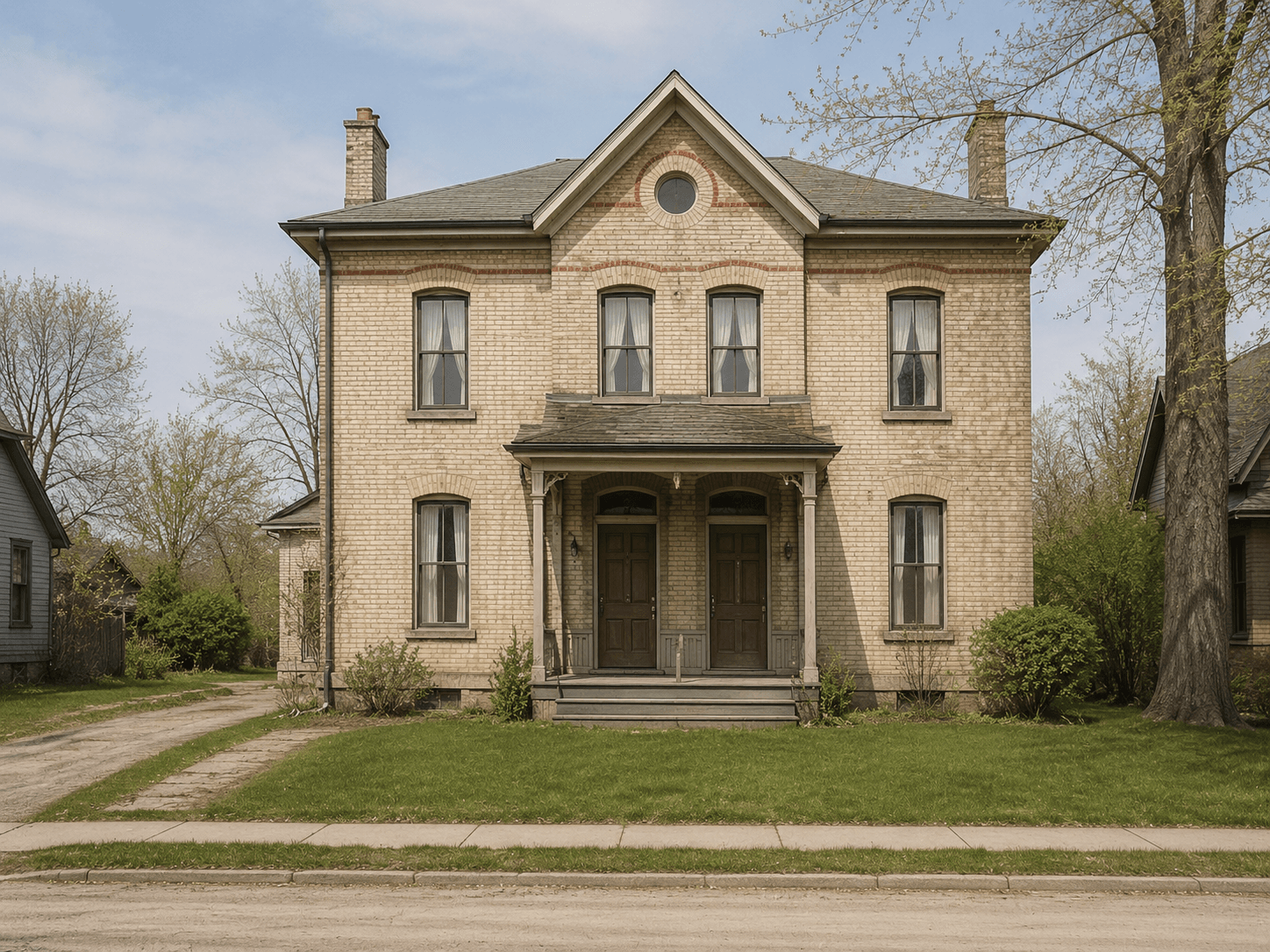
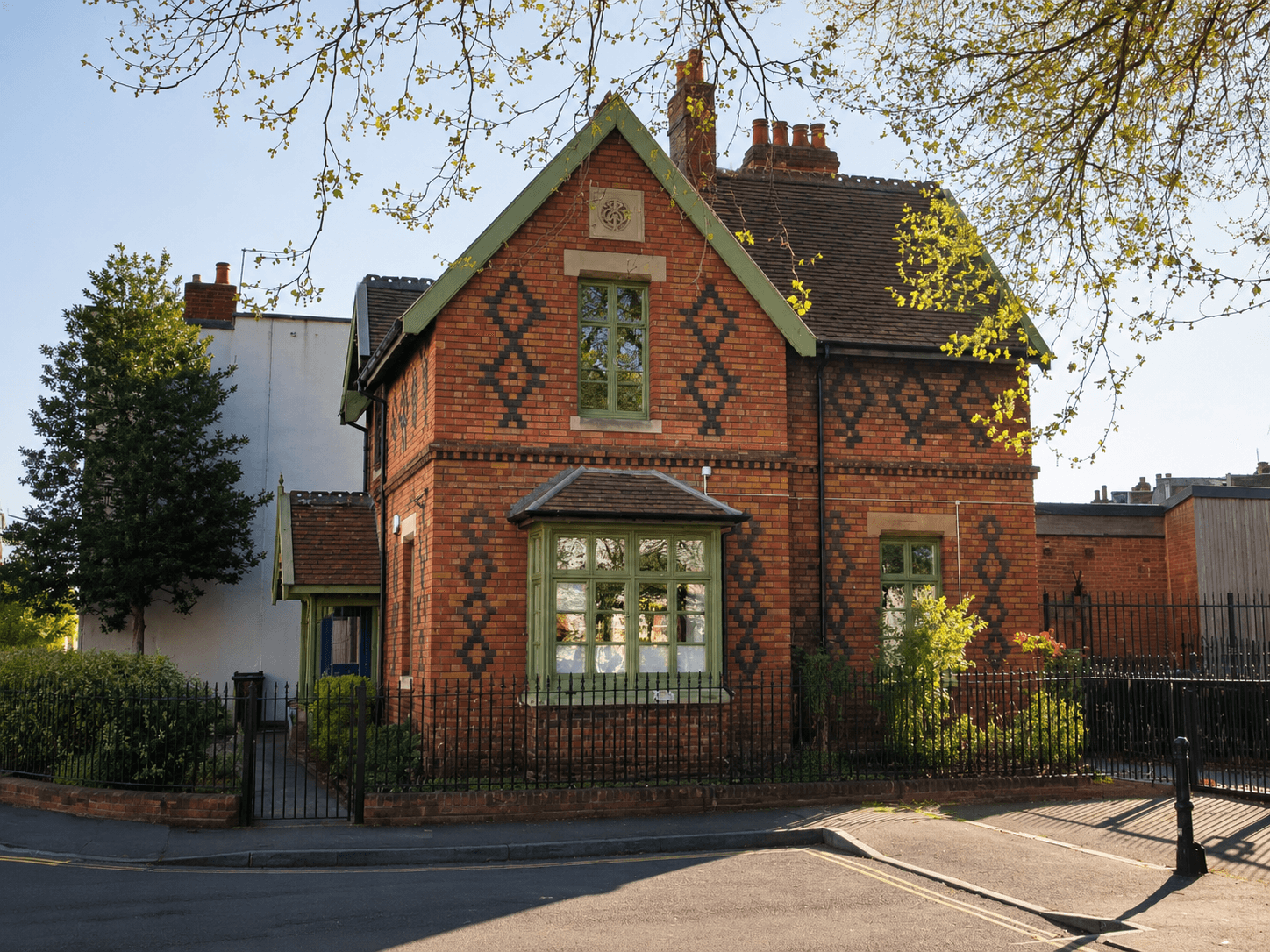
Hilda was born November 25, 1910 at 35 Thomas Street, in the St Pauls district of Bristol — a narrow working-class terrace, about 16 feet wide, two rooms deep, with a scullery and outdoor privy. Her father, William Charles Rowley (b. 1881/82, Staffordshire), was 28 and worked as a cycle mechanic — a genuinely skilled trade at the moment bicycles were the primary vehicle of working-class mobility and automobiles remained a rich person's luxury (a car cost roughly six years of an average worker's wages). Her mother, Rosella "Rose" Victoria Vincent (b. 1884, Swansea, Wales, raised in Bristol), was 26.
Hilda was baptized January 8, 1911 at St Agnes Church, on the same street the family lived on. She was the third of what would eventually be six children born to William and Rose: William Aquila Rowley (b. June 1906), Edith Florence Rowley (b. 1909), and Hilda Emma (b. 1910). By the 1911 census, the family of five was living in three rooms total at 35 Thomas Street with no indoor plumbing, one coal fire for heat and cooking, and every domestic task — laundry, illness, a crying infant — shared by everyone in the household simultaneously.
Rose's own childhood had been considerably harder: her father, William Vincent, a bootmaker, died in May 1897 when she was 13, leaving her mother, Emma, to raise six children with no social safety net. By the 1901 census Rose, 16, was already working in Bristol's boot-and-shoe trade to help support five younger siblings. It was around this time that a young William Rowley, newly arrived in Bristol to pursue mechanical work, became a boarder in the Vincent household. William and Rose married on September 17, 1905 at St Matthew Moorefields, Bristol.
Family lore (recorded from Rose's daughter Doreen) holds the move to Canada was "all Uncle Bill's fault." Rose's brother, William Vincent, convinced William Rowley that Canada offered a future Bristol couldn't. With three children in three rooms and no path to advancement in Bristol's rigid class system, William Rowley crossed the Atlantic alone first, sailing from Liverpool aboard the RMS Lusitania in May 1912 — arriving in New York on May 18, 1912, barely five weeks after the Titanic disaster, when the loss was still front-page news and public inquiries were underway on both sides of the Atlantic. From New York he travelled inland by rail to London, Ontario, to find work and a home before sending for his family.
Rose followed fourteen months later. On August 23, 1913, she boarded the RMS Royal Edward at Bristol with all four children: William, Edith, Hilda (not yet 3), and infant Ivor, born after William had left. The passenger manifest lists her occupation as "housewife" and, in the column for destination, simply "to husband." The family travelled third class (steerage) — cramped, poorly ventilated quarters low in the hull, near the engines, for a seven-day crossing, arriving at Quebec on August 30, 1913. From there the family travelled by Canadian Northern Railway the final few hundred miles inland to reunite with William in London, Ontario.
The family settled first at 152 John Street, where William is listed in the 1914 city directory as "mechanic." By the 1915 directory his occupation changed abruptly to "janitor, Bank of Toronto" at the same address.
Family oral history (Doreen and Joan's recorded interviews) explains the gap the directories don't: William suffered a serious workplace accident at the Dennis Wire & Iron/steel works in London and lost an eye, ending his mechanical trade instantly. William spent the rest of his working life doing building-maintenance and engineering work at the Bank of Toronto, a role the family remembered simply as "janitor," even though a 1935 voters list records his occupation more grandly as "engineer" — which likely reflects both the real technical demands of running a coal-fired boiler and building systems in a multi-storey bank building, and a measure of pride.
A birth registration for Hilda's younger sister Doreen Ellen Rowley (b. October 9, 1914) confirms the family was living at 150 John Street at that date and already lists William's occupation as "Janitor" — pinning the accident to sometime in 1914, consistent with the family's account.
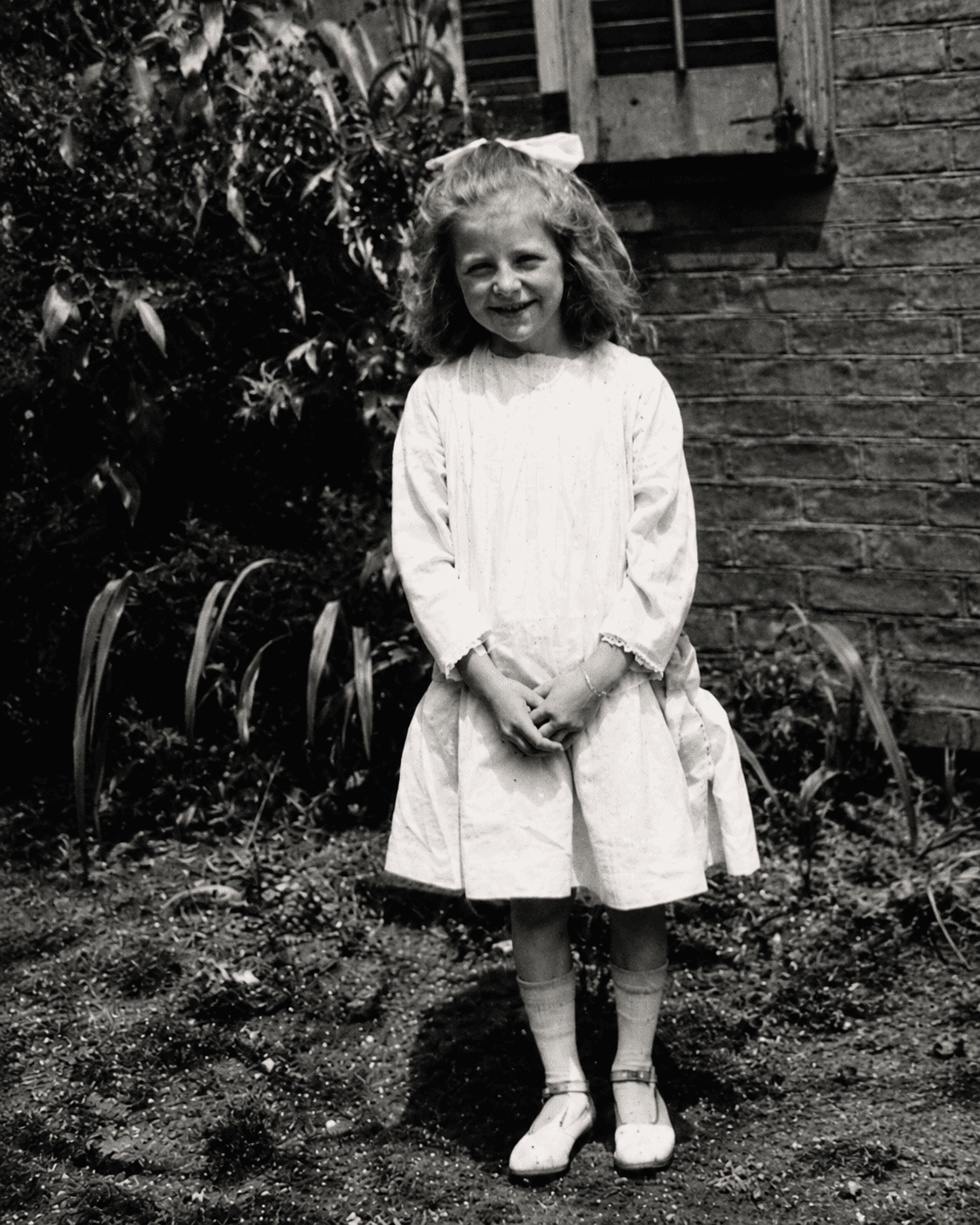
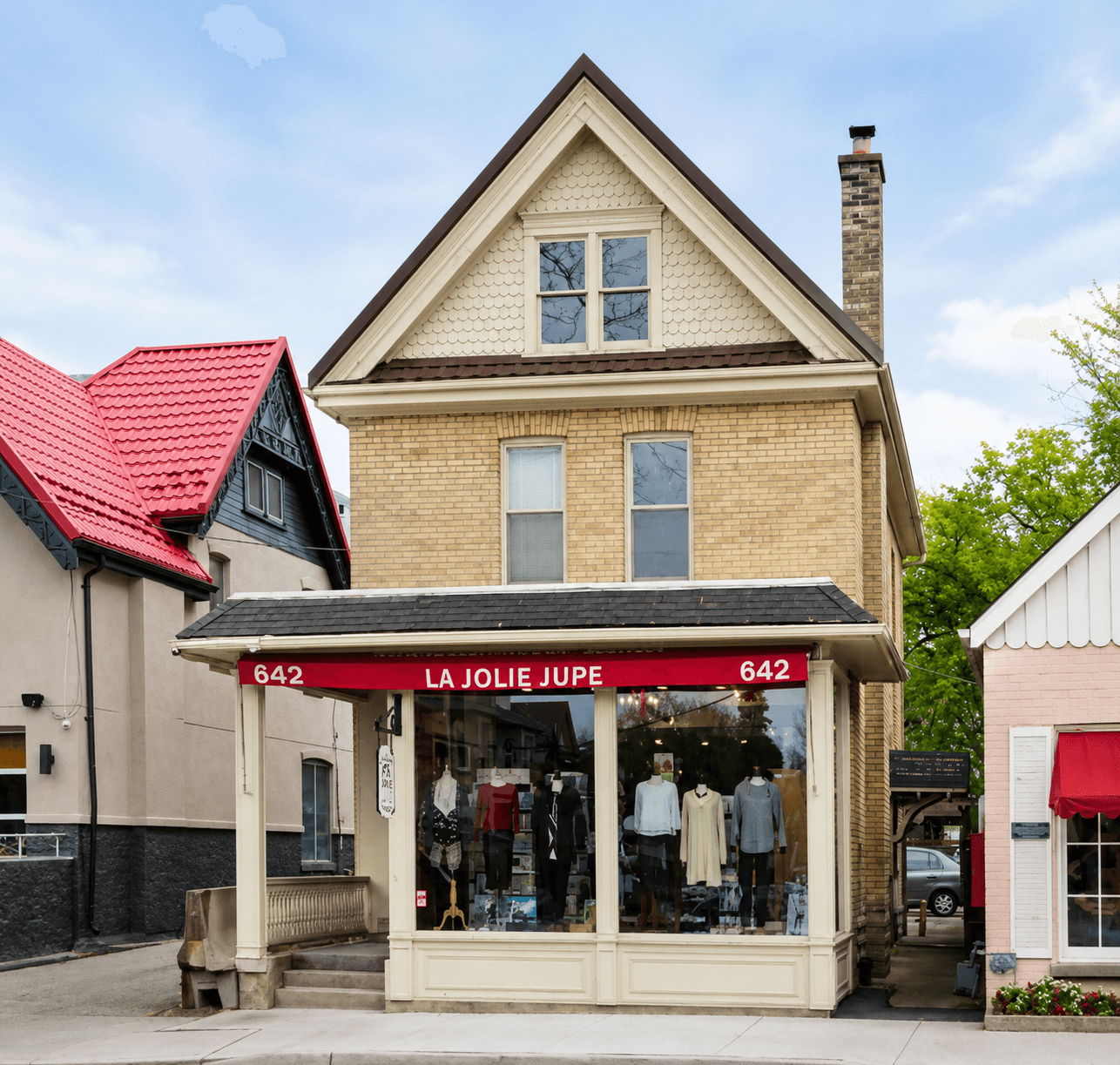
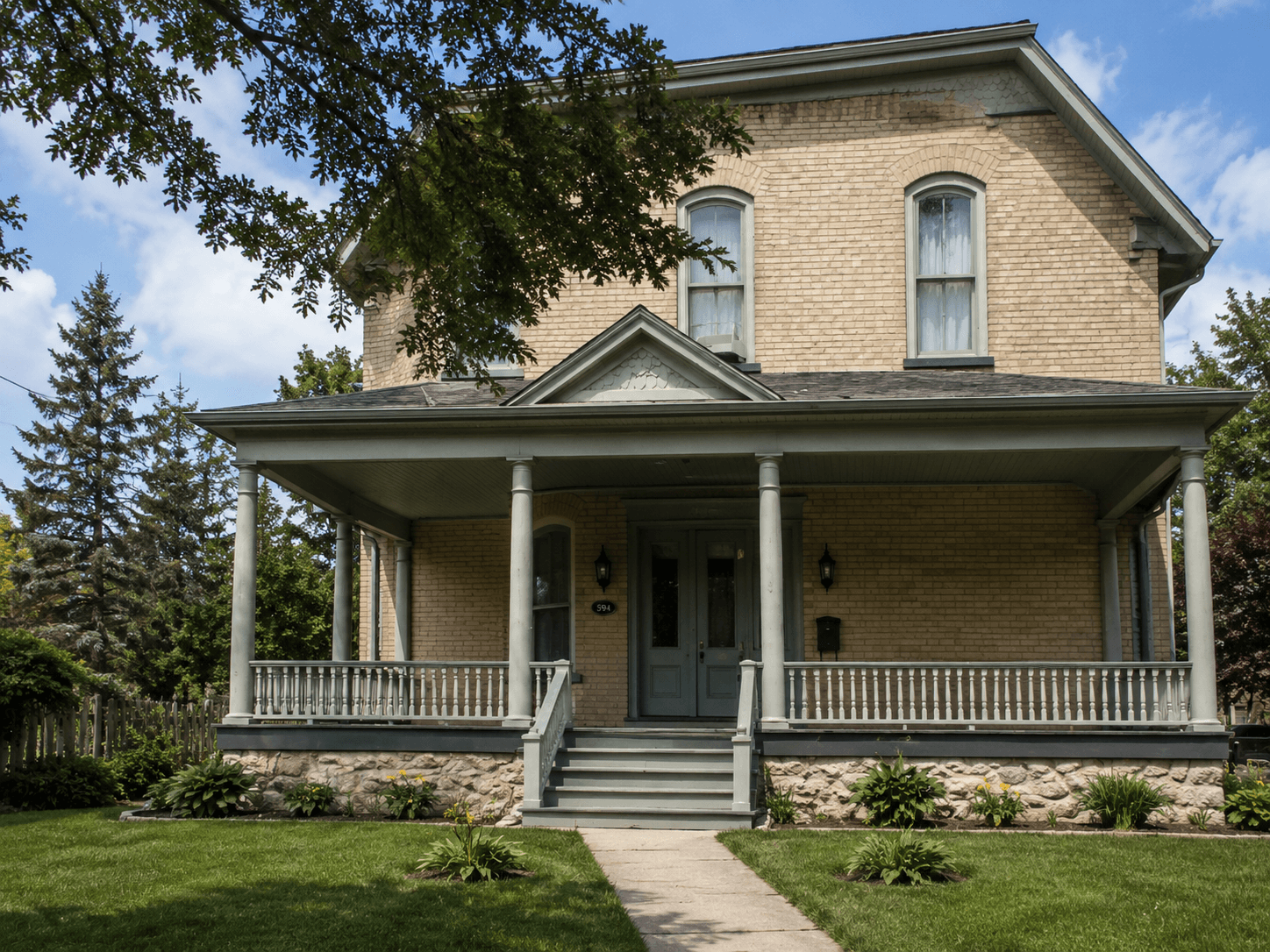
Three more children were born in Ontario: Doreen Ellen (1914), Marjorie Victoria, and Norman Charles, bringing the total to six children. The 1931 census household is William, Rose, Edith, Hilda, Ivor, Doreen, Marjorie and Norman — six children plus their parents, eight people total. The family moved several times in London: to the rear of 642 Richmond Street (a blacksmith's property, early 1920s), then to 173 Central Avenue by 1931, and to 594 Talbot Street by 1935.
Hilda was confirmed in the Anglican faith on Tuesday, April 7, 1925 at St. Paul's Cathedral, London, by Laird Williams, Bishop of Huron, at age 14.
Newspaper archives confirm Hilda's schooling in the Talbot Street area of London. On July 10, 1923, the London Evening Advertiser reported "Hilda Rowley" passing her high school entrance examination in the St. Peter's Center group of schools. She went on to the Technical High School's Commercial Department, where the June 24, 1924 promotions list shows "H. Rowley" earned Honors, promoted from First to Second Year — the shorthand, typing, and bookkeeping training that would carry her into her stenography and bank-clerk career through the Great Depression.
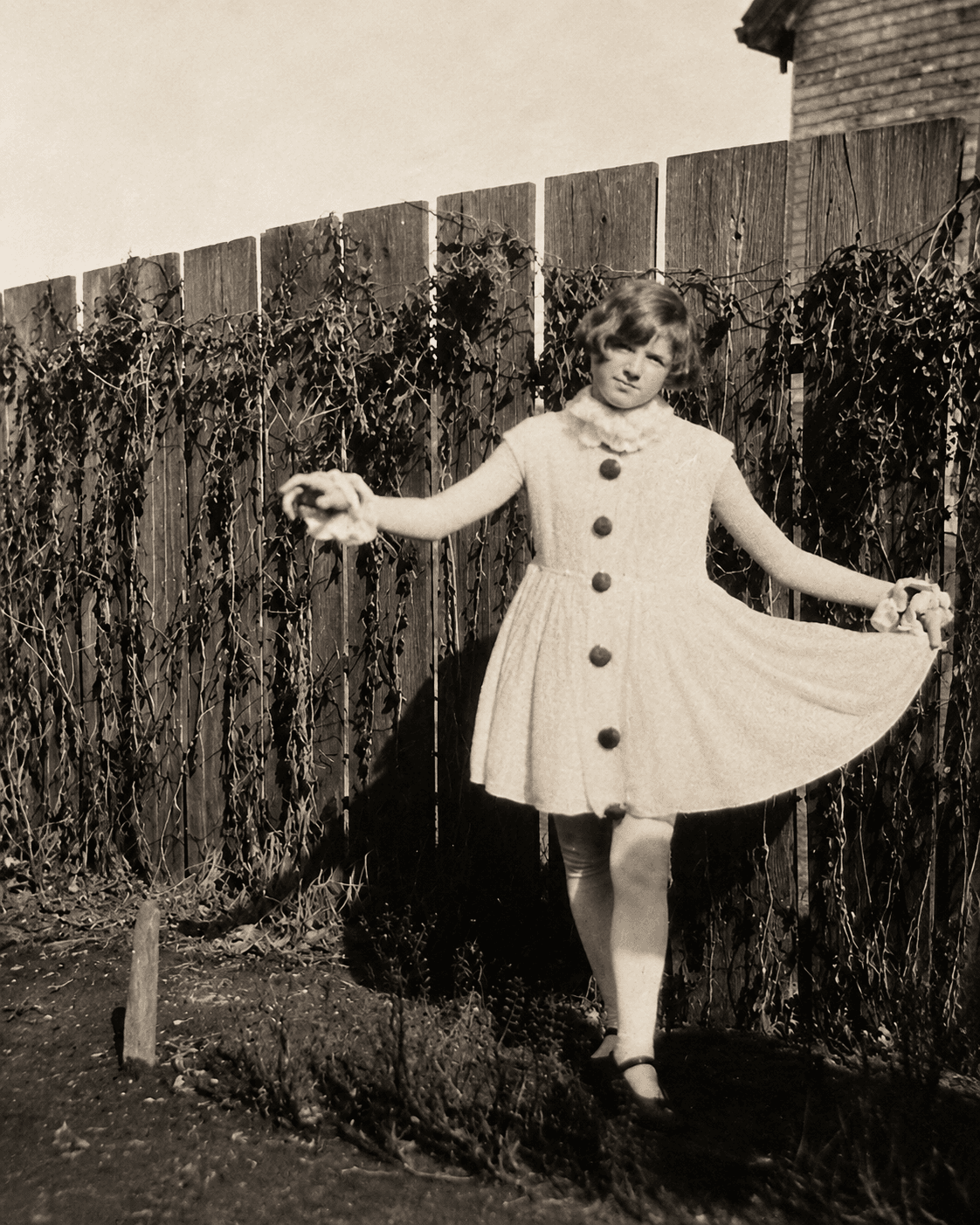
By the 1931 census, the family of eight was renting a six-room brick house at 173 Central Avenue for $25 a month and did not own a radio — a specific marker of tight finances at the time. At 20, Hilda was working as a bank stenographer, reporting annual earnings of $750 — two and a half times the family's $300 annual rent, and a highly skilled role: accurate real-time transcription and flawless retyping, with no margin for error.
By 1935 the federal voters list shows her as a "bank clerk," at the family's new address on Talbot Street, alongside her sister Edith (a tailoress, her role before enlisting in the military during WW2) and their father William (listed as "engineer").
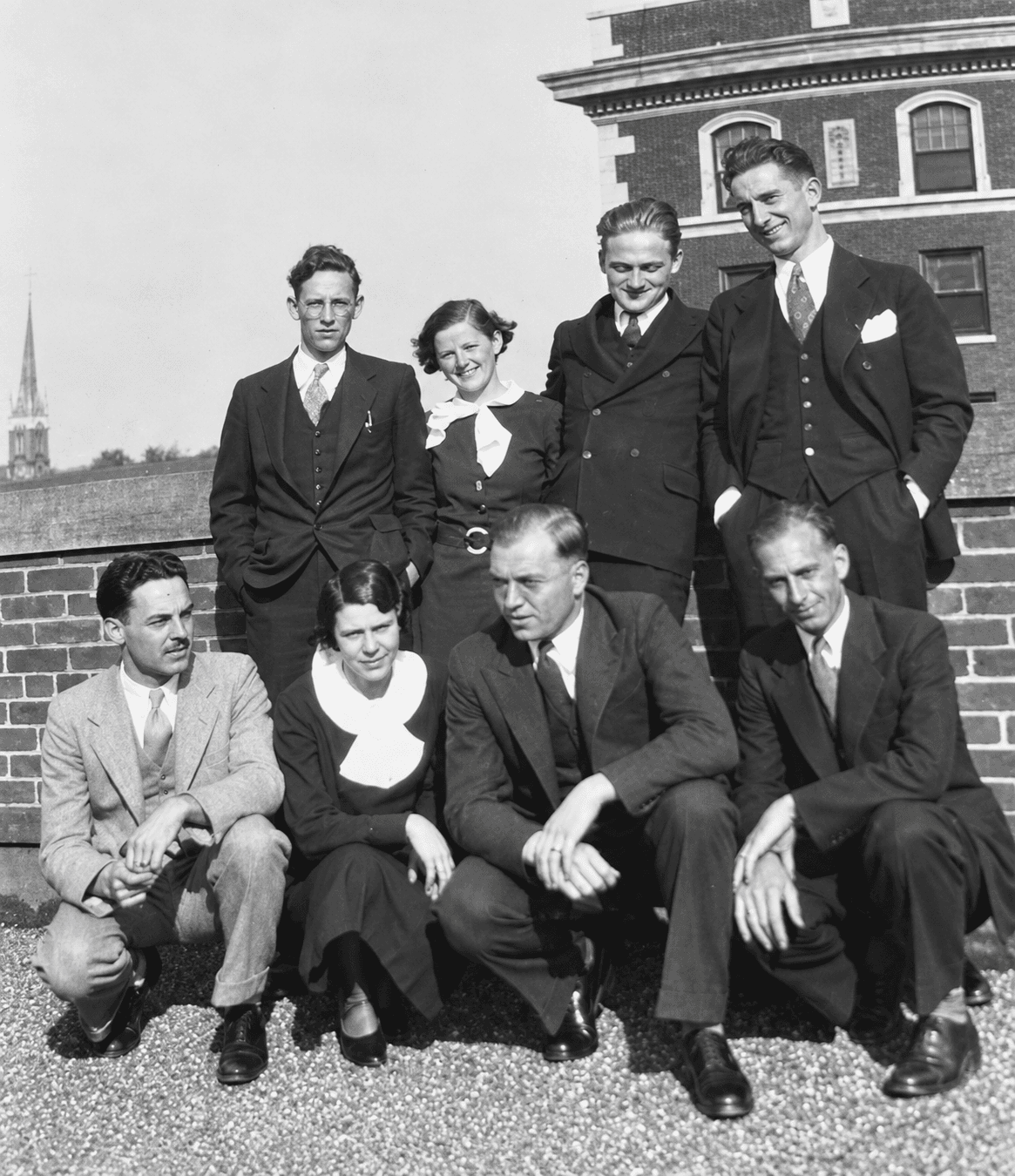
Both the census and the voters list say "Bank of Montreal." Family knowledge, and recently discovered wedding-shower and birth-announcement clippings from the London daily paper, correct this to the Bank of Toronto (now TD Bank) — the same institution her father worked for as caretaker and engineer.
Hilda's income through these years functioned as the household's financial backbone during her twenties — a period family history frames as effectively delaying her own marriage and family until her siblings were old enough to work and the household's dependence on her wages eased.
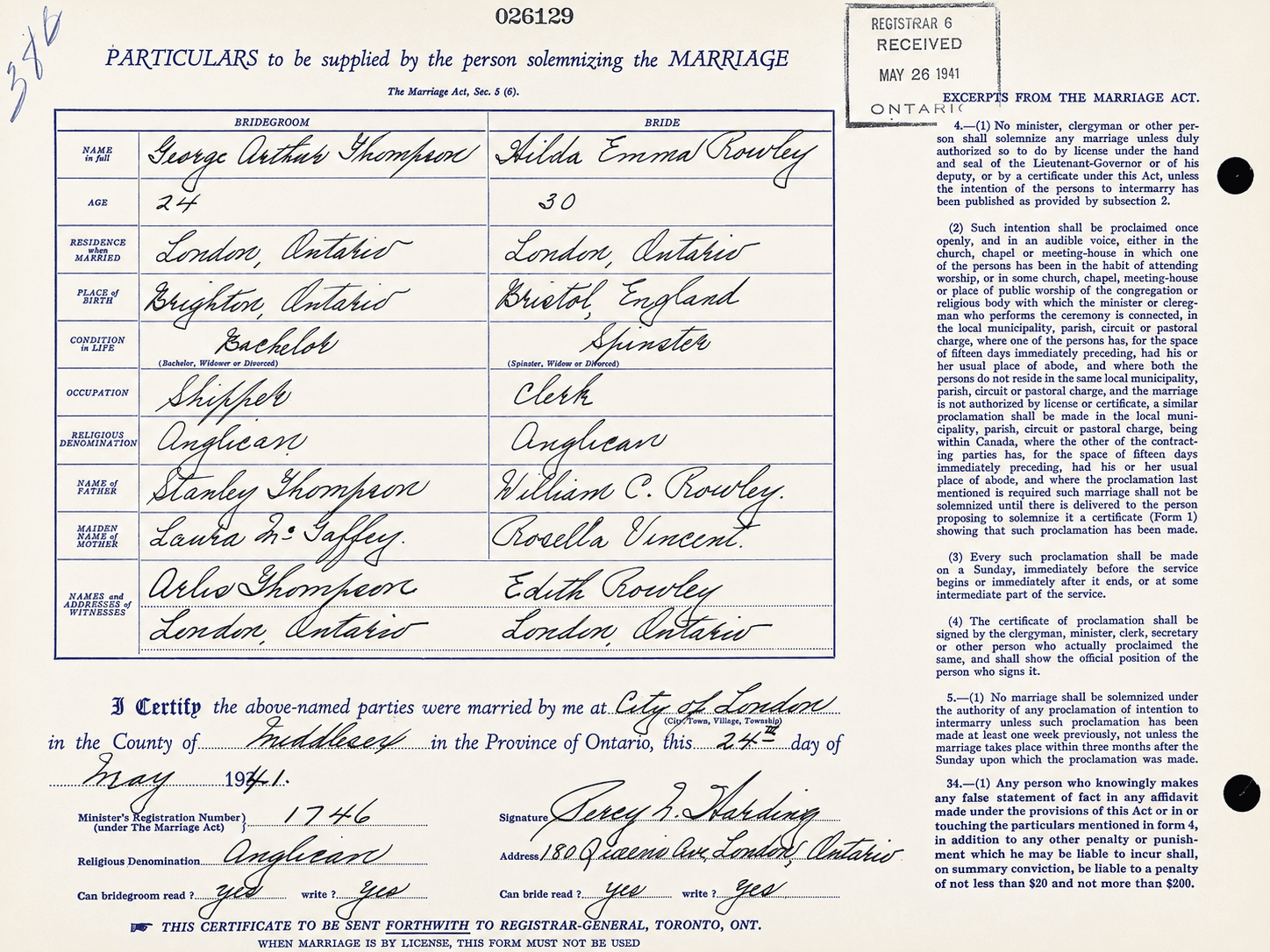
Hilda married George Arthur Thompson on May 24, 1941, at St. Paul's Cathedral, London. She was 30; Art was 24, born July 3, 1916 in Brighton, Northumberland County, Ontario, the son of Stanley James Thompson (an agent for the Canadian Pacific Railway) and Laura McGaffey Thompson, who married in 1906. The marriage register describes Hilda as a spinster, clerk, Anglican, born in Bristol, daughter of William C. Rowley and Rosella Vincent; her sister Edith was a witness.
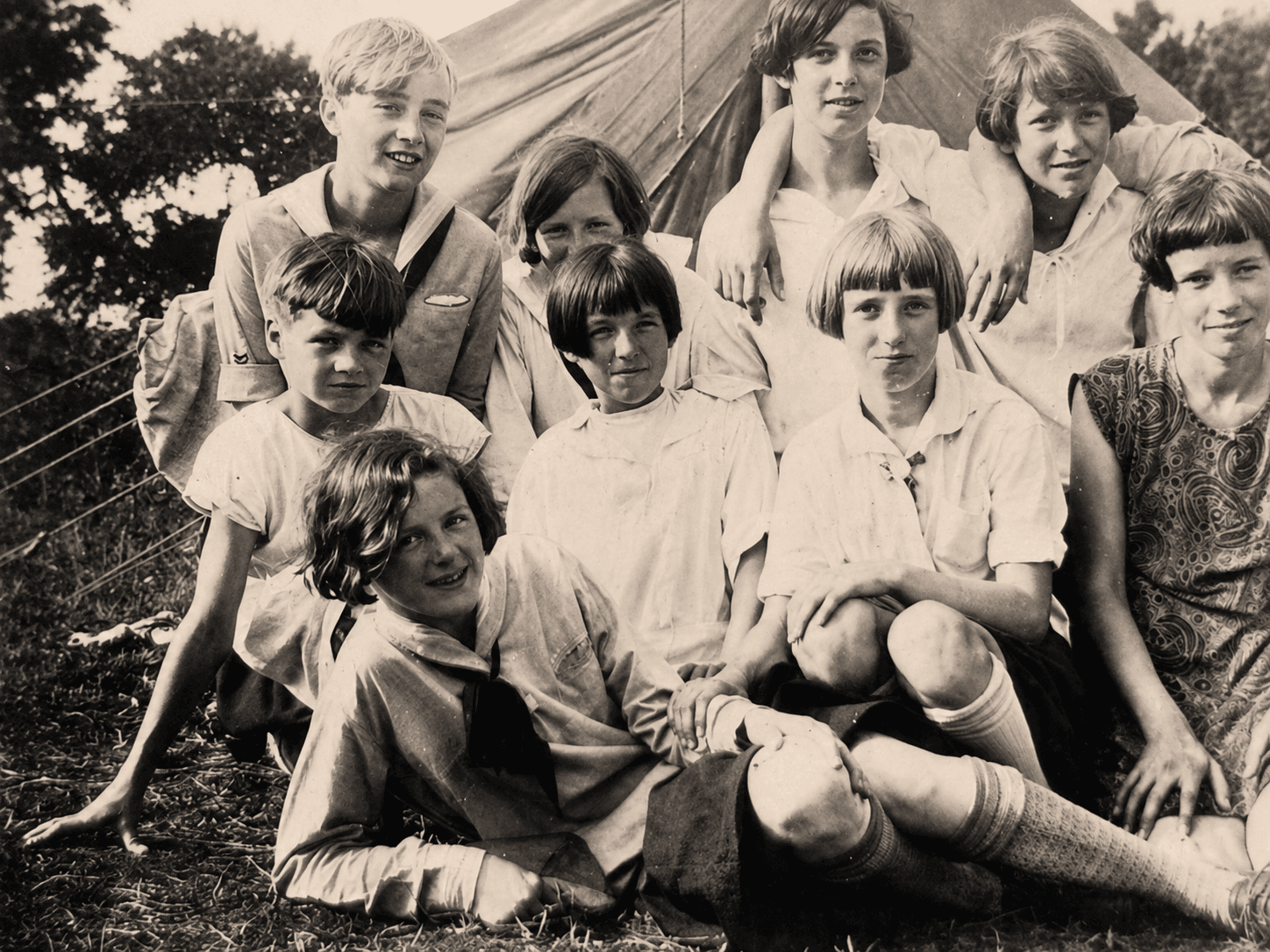
Family lore indicates that Art and Dolly likely met at a church camp.
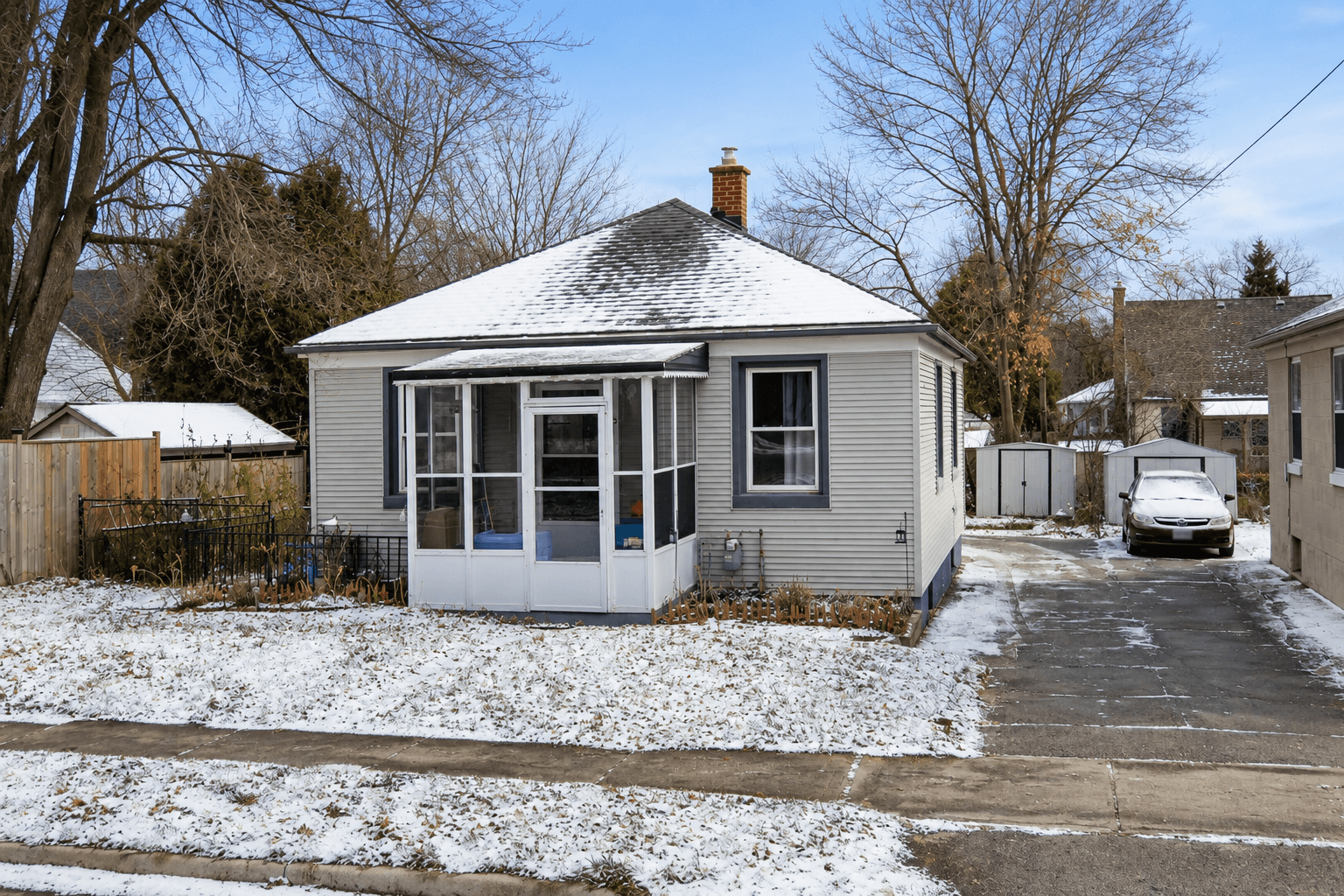
Hilda and Art had two children: Joan and David. Post-war, the family was established at 15 Gammage Street, London — their home for the rest of their lives, near Knollwood Park School.
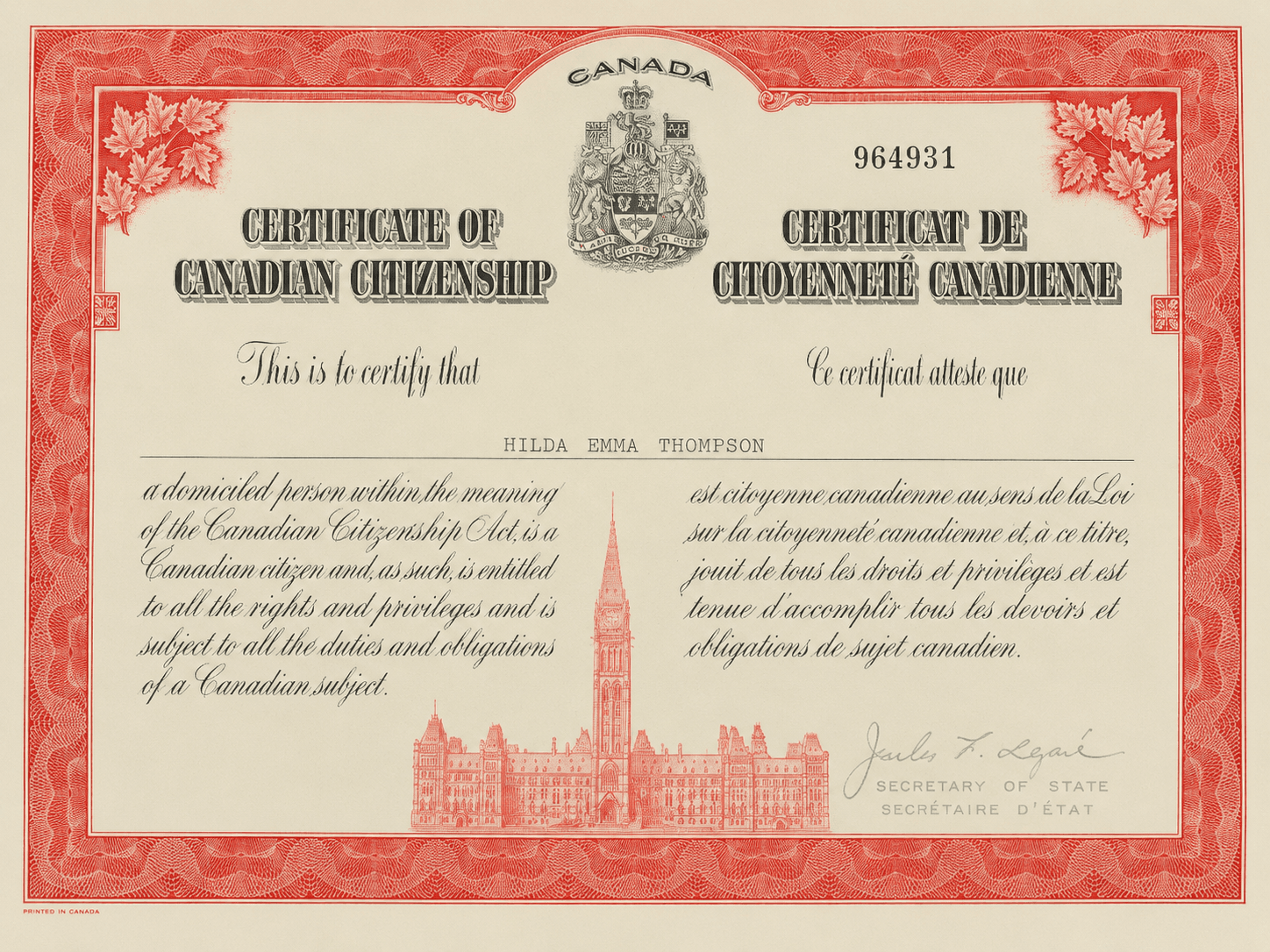
A surviving Certificate of Canadian Citizenship, issued to "Hilda Emma Thompson," confirms family knowledge that she formally became a Canadian citizen in the 1960s — more than fifty years after arriving as a toddler. Because she was born a British subject and the Canadian Citizenship Act didn't take effect until January 1, 1947, this wasn't required for her to live, work, or vote in Canada; it appears to have been a deliberate, voluntary step rather than a bureaucratic necessity.
Hilda died from a heart attack in London on January 9, 1993, at 82, still living at 15 Gammage Street. Art died about nineteen months later, on August 22, 1994, at St. Joseph's Health Centre, London, in his 79th year.