Section 11, Township 26, Range 11 W2, near Ituna, Saskatchewan, August 25, 1915
Died
London, Ontario, September 27, 2010, age 95
Married (1)
John Carl "Jack" Goebel, Regina, Saskatchewan, August 1937; widowed 1964
Married (2)
Thomas Herbert "Tom" Wilson, by November 1983; widowed 1997
0:00 / 0:00
Listen to Violet's storyRecorded account, approx. 21 min
Her Story
Violet Myrtle Martin was born on 25 August 1915 near Ituna, Saskatchewan, a district only a decade old, and into loss from the start: her father died ten weeks before her birth, leaving her mother, Jennie McBurney, to remarry Thomas Haynes and raise a blended household on the same fast-filling prairie. Violet married John Carl "Jack" Goebel in Regina in August 1937 and quickly became a soldier's wife, raising three sons born in rapid succession from 1938 to 1940 largely on her own through the war years, then a fourth child, Gwendoline, a decade later in 1950. The family eventually moved to Cobourg, Ontario, a small lake-shore town that had just become home to No. 26 Ordnance Depot, where Jack served as a corporal until his death in 1964 left Violet a widow at 49 with a teenage daughter still at home. She carried on alone for nearly two decades before remarrying, by November 1983, to Thomas Herbert "Tom" Wilson, a Londoner and fellow widower, settling with him in Strathroy, Ontario. Tom died in 1997, and Violet outlived him, dying on 27 September 2010.
Ituna, and a childhood inside a new district
Violet's birthplace was not an old, settled place. The Grand Trunk Pacific reached that part of Saskatchewan in 1907–08, and the railway is the reason Ituna existed at all: a post office in 1909, incorporation in 1910, and a district that filled in through the 1910s with British settlers taking up homesteads alongside a growing Ukrainian community drawn by the same rail line. By the 1920s Ituna had become the market town for the farms around it.
Vi’s Schoolhouse, Ituna SK, c. 1984. Photo taken by Fred Goebel on a cross country family trip
She was also born into loss. Her father, John Frederick Martin, died at Ituna on 19 June 1915, ten weeks before she was born, so Violet's earliest fact about her own life was one she could only ever know secondhand: that her mother, Jennie McBurney, an Ulster immigrant from Banbridge, County Down, was already a widow with young children when Violet was born the youngest. Jennie remarried Thomas Haynes and raised a large blended household, Martins and Haynes together, on the same rapidly filling prairie. Violet's own later life would echo this shape almost exactly, down to the remarriage in later years, though the second time it happened to her rather than to her mother.
Violet was five years old in the 1921 census and about fifteen in 1931, growing up entirely inside this first generation of settlement, in a household that was itself a product of the district's speed and instability: her mother widowed before Violet was born, remarried to Thomas Haynes, raising Martin and Haynes children together on land that had been raw prairie a decade earlier.
This is the world the Ituna history book, So Much Is Ours, was written to preserve, and it is where the driest facts in Violet's file come from: her parents' names, her siblings, and the plain sentence that placed her, decades later, as "married Jack Goebel, and lives in Strathroy, Ontario."
Marriage and a soldier's wife in wartime Regina
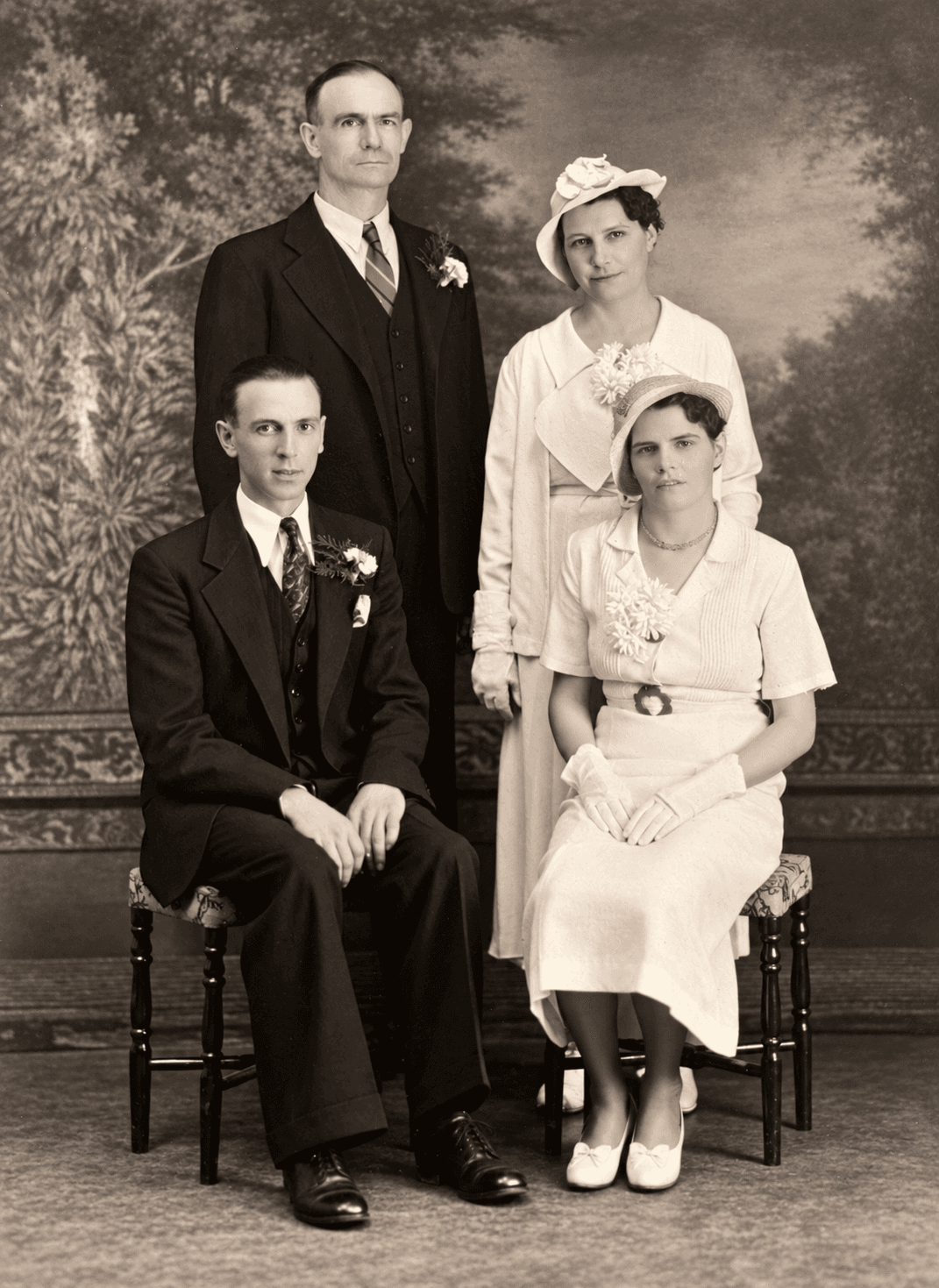
Violet and Jack married in Regina in August 1937, and the newspaper notice of it, three years before the war, gives no hint of what the marriage would look like inside five years.
Vi and Jack’s wedding
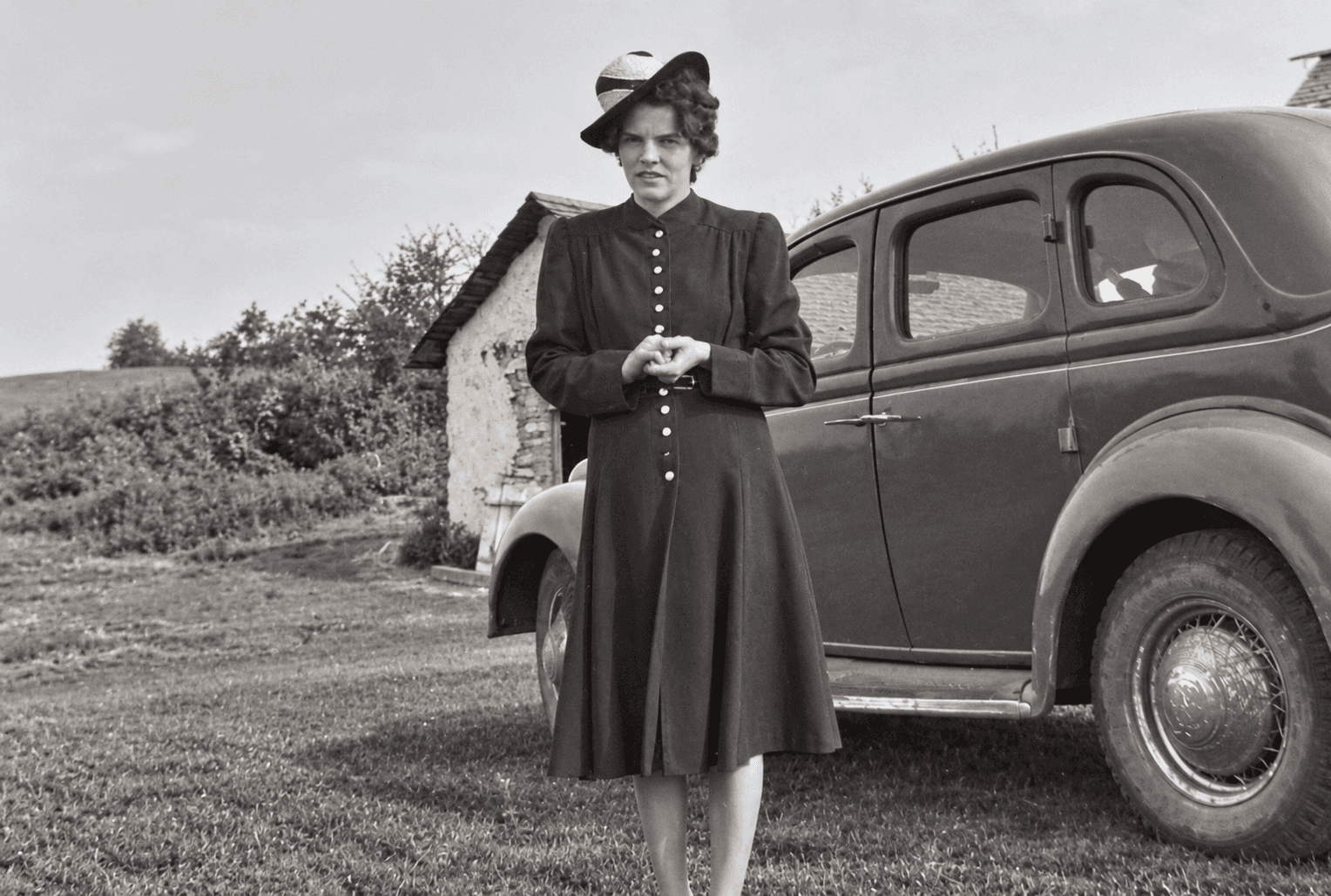
Vi just after the wedding c. late 1930s
By 1941 Jack was training with the 120th Canadian Army (Basic) Training Centre in Regina, and by 1949 the voters list finds the family at 618 Athol Street with Jack recorded simply as "armed forces."
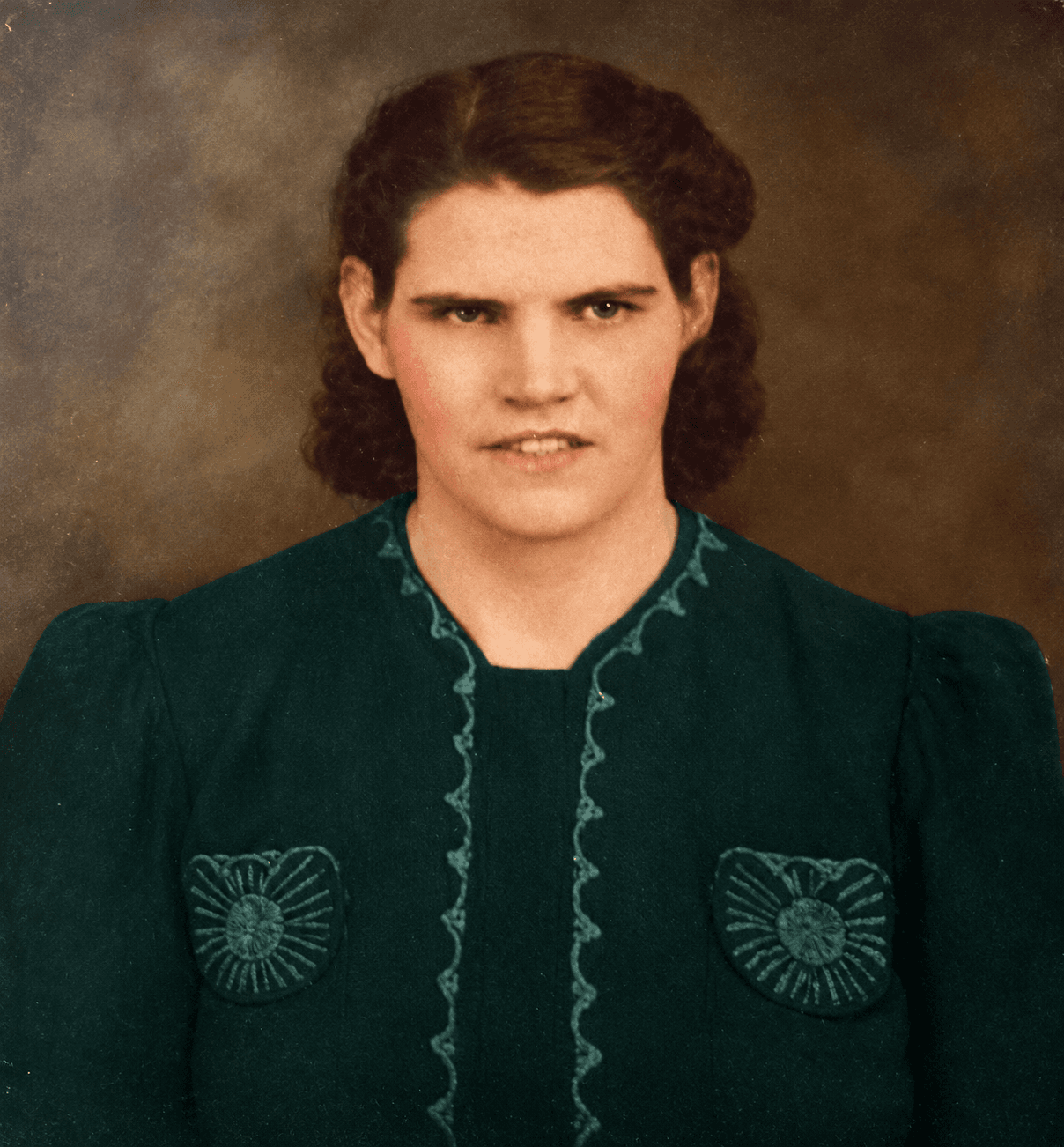
Vi in the early 1940s so Jack could have an image of her while fighting overseas.
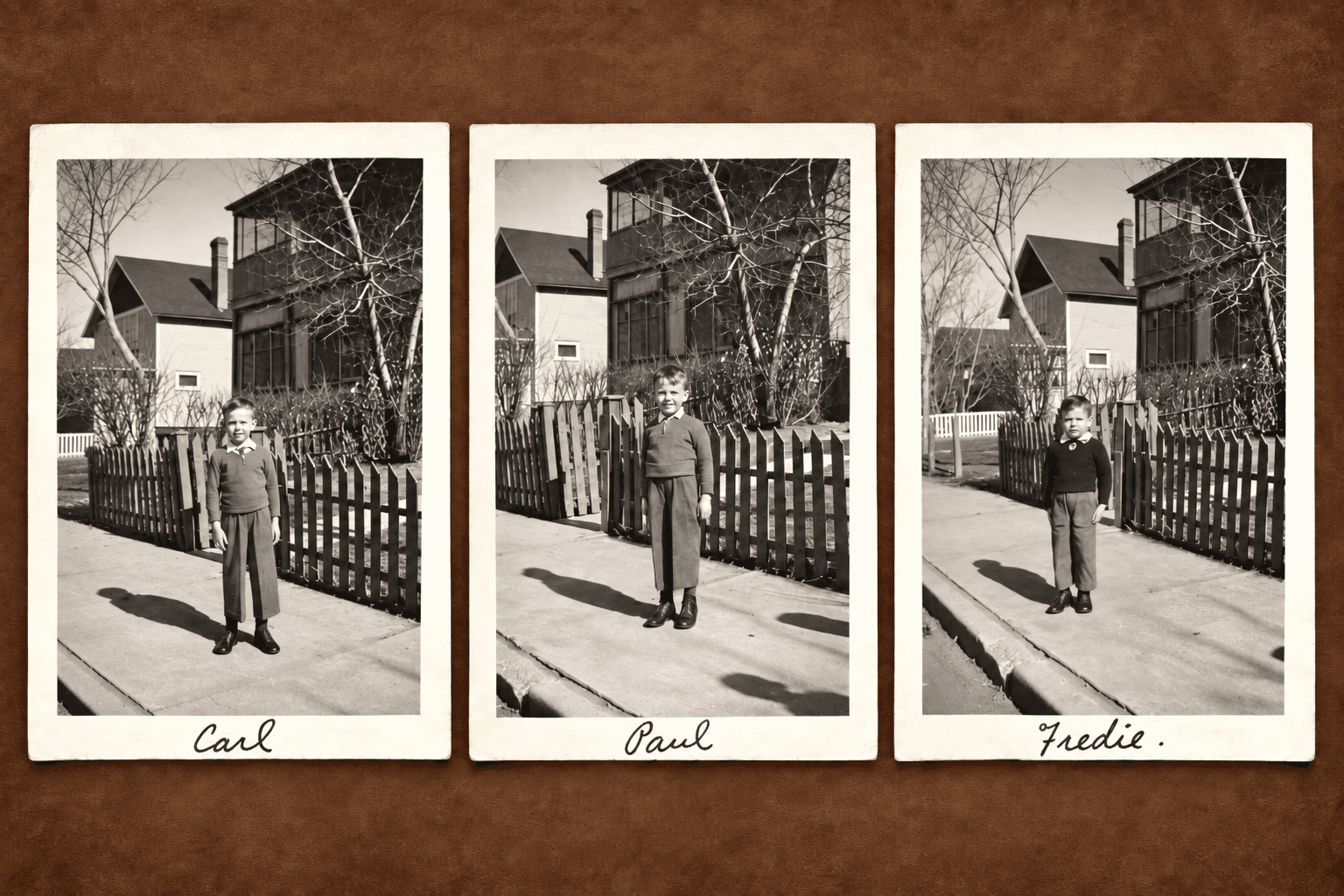
Regina during the war was a garrison city as much as a prairie capital, its training centres feeding thousands of men into service and leaving thousands of wives, Violet among them, to manage households against a backdrop of ration books, Victory Bond canvassing, and letters that arrived irregularly from overseas. She was raising three boys under the age of six for most of the war's middle years, John Carl Jr., Paul and Fred all born within twenty-six months of each other between 1938 and 1940, which means Violet's own war was fought almost entirely at home, in a rented house in a city built around a war it did not fight, keeping small children fed and steady while their father trained and then went overseas.
Violet sent these photos of the boys overseas so Jack could watch his kids grow up c. 1943
A decade later, in 1950, the family's fourth and last child, Gwendoline, was born, by which point the wartime chapter of the marriage was long closed and Jack's service had turned into a career: he stayed in uniform, re-enlisted in the Regular Army in 1947, and by the mid-1950s was a corporal in the Royal Canadian Ordnance Corps. Violet's Regina, by then, was no longer a wartime garrison town but a peacetime military family's home base, recorded in the 1950s voters list at 2955 McTavish Street which Jack and boys helped build.
Cobourg: a depot town's family
The move east took the Goebel family to Cobourg, Ontario, and the timing is not incidental. The Department of National Defence bought land at Cobourg in 1951 and built through 1952 and 1953, and in 1954, the year Jack was awarded the Canadian Forces Decoration for twelve years of service, the headquarters of No. 26 Ordnance Depot moved there from Ottawa, chosen in part for its rail connections. Cobourg in the 1950s was, for a stretch, a genuine military company town: the depot supplied other Canadian Army installations and ran the army's only respirator assembly plant, and a family like the Goebels lived inside a small, self-contained military community rather than simply a lakeside Ontario town.
Violet's Cobourg was Legion Branch 133, a curling rink at the Waverley Club where Jack played alongside two staff sergeants from his own depot, and a household built around a posting rather than a career chosen for its own sake. The depot did not last: it was renamed after unification in 1966, downgraded from a base to a station, declared surplus, and closed for good on 31 August 1970, by which point Jack had been dead for six years and Violet had already left Cobourg as a widow.
Jack's death in 1964, after what the family remembers as a long illness with stomach cancer, left Violet a widow at 49 with Gwendoline still a teenager at home. The 1968 voters list at 298 Clyde Street records her alone for the first time: Mrs. Violet Goebel, no second name beside her own.
Strathroy and a second marriage
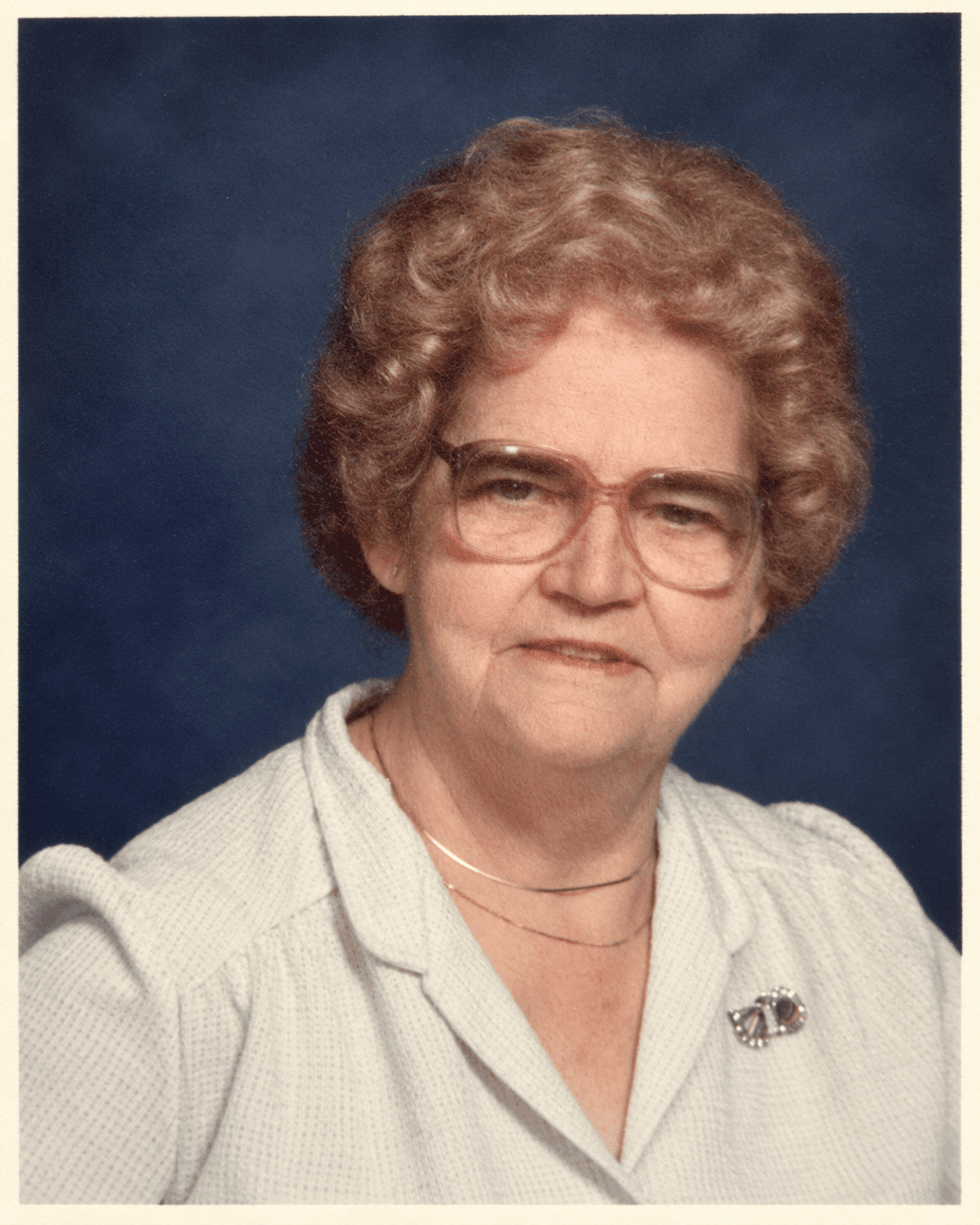
By November 1983 Violet had remarried, to Thomas Herbert "Tom" Wilson, and was living in the small town of Strathroy, Middlesex County, roughly thirty kilometres west of London. Tom was a Londoner by birth, nine years older than Violet, and had himself been married before, to Ruby Smith, who predeceased him; so both of Violet's husbands, as it happens, came to her each carrying an earlier marriage of his own. Violet's will, drawn that November, is the fullest surviving record of this second household: she names Tom in full, names her son Frederick Thomas Goebel as executor, names her daughter Gwendoline Bernice Parkinson by her married name as the alternate, and divides her estate among all four children, with the plain, hard clause common to wills of the era that a child who predeceased her would pass nothing to their own heirs. That clause would matter: by the time Violet actually died, it had already taken effect for three of her four children.
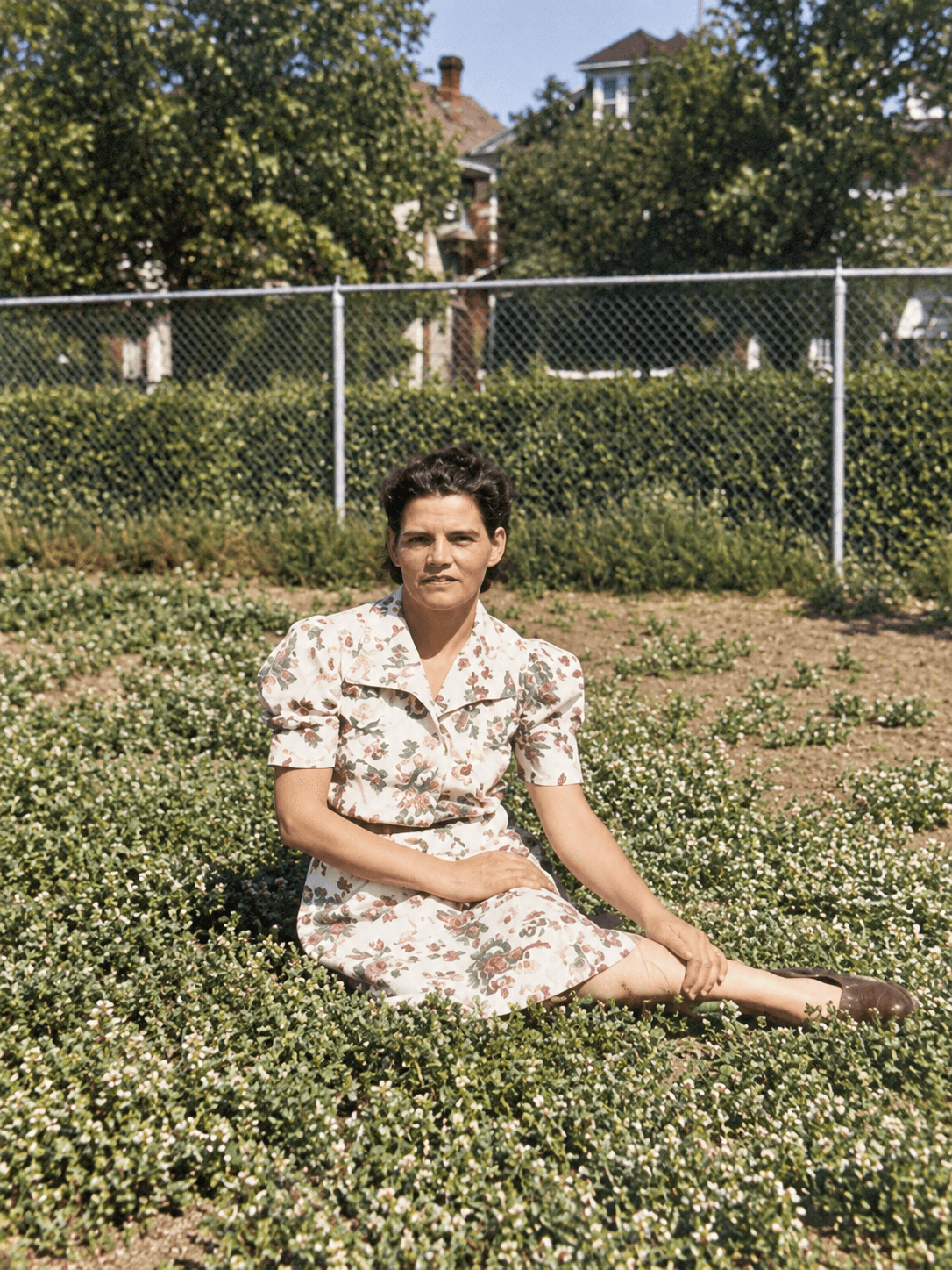
Vi in her late 60s or early 70s.
Tom died in London in June 1997, after which Violet lived over a decade longer, dying on 27 September 2010 at 95, in London, Ontario.
A life in three chapters
Violet Martin. Born into a district still being built, the youngest child of a family already reshaped by her father's death before her birth, raised in a blended Martin-Haynes household inside the first settled generation of the Ituna country.
Violet Goebel. A Regina wife and wartime mother of three boys born in rapid succession, then a fourth child a decade later; a soldier's family that followed his career east to a depot town built almost entirely around his own trade; a widow at 49.
Violet Wilson. A second marriage in her late sixties, a household in Strathroy built with a man who had likewise lost a first spouse, and a long widowhood of her own after Tom's death in 1997, during which she outlived three of her four children before her own death in 2010.